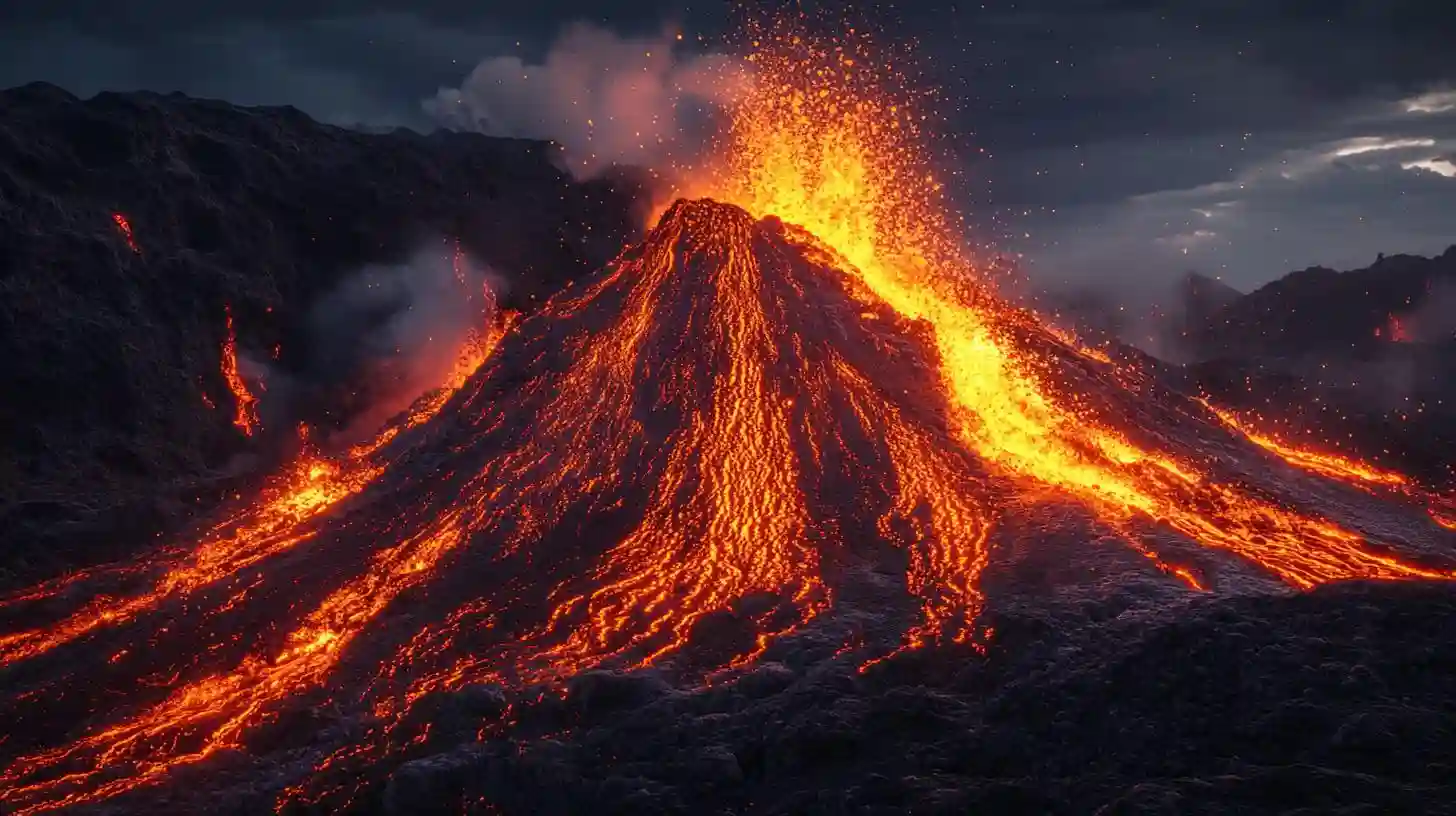
Volcanoes are among the most captivating natural phenomena on Earth, drawing the interest of scientists as well as curious observers. Their eruptions can reshape landscapes, create new landforms, and even influence global climate patterns. The driving forces behind these majestic yet dangerous events are rooted in complex geological processes that occur deep within the Earth. To comprehend why volcanoes erupt, it is essential to explore the makeup of the Earth, the movement of tectonic plates, and the behaviors of magma.
The Earth is composed of several layers: the crust, mantle, outer core, and inner core. The crust is the outermost layer where we reside, primarily consisting of solid rock. Beneath the crust lies the mantle, which is semi-solid and extends to a depth of about three thousand kilometers. This layer behaves like a viscous fluid over geological time, allowing for the movement of tectonic plates that float upon it. The movement of these plates is a driving force behind volcanic activity.
Tectonic plates constantly shift due to convection currents within the mantle, caused by the heat generated from the decay of radioactive elements and the residual heat from the planet's formation. These movements can lead to scenarios where plates collide, pull apart, or slide against each other. Such interactions can create various types of volcanic activity. For instance, at divergent plate boundaries, where plates are moving apart, magma rises to fill the gap and creates new crust as it cools. This is often observed in mid-ocean ridges, where volcanic activity builds underwater mountains.
At convergent boundaries, where one plate is pushed under another, subduction zones form. The descending plate heats up and releases water, causing the overlying mantle to melt and generate magma. This process leads to intense volcanic activity, often found around the Pacific Ring of Fire, a belt of seismic and volcanic activity encircling the Pacific Ocean. Areas where tectonic plates interact are typically where the most explosive eruptions occur due to the accumulation of pressure and the composition of the magma.
Magma itself plays a crucial role in the eruptive behavior of volcanoes. Magma varies in composition, temperature, and gas content, and these factors significantly influence how and when a volcano erupts. For example, basaltic magma is relatively low in viscosity and allows gases to escape easily, resulting in relatively gentle eruptions. Conversely, magma that is rich in silica is much more viscous, trapping gases and leading to explosive eruptions when the pressure becomes too great. The presence of volatiles, such as water vapor and carbon dioxide, contributes to this pressure buildup. As magma ascends through the crust, dissolved gases expand and can cause explosive fragmentation of the magma, contributing to explosive volcanic eruptions.
Another aspect of volcanic activity is the relationship between eruptions and the accumulation of magma within a magma chamber. A magma chamber is a reservoir of magma located beneath a volcano, and its filling can be a prolonged process. When sufficient pressure builds due to the inflow of magma and the accumulation of gases, the volcano can erupt. The time scales for this pressure buildup can vary significantly, making it challenging to predict eruptions. Some volcanoes may exhibit signs of unrest, such as increased seismic activity, ground deformation, and gas emissions, serving as warnings before an eruption occurs. However, other eruptions may happen with little to no warning, surprising surrounding communities and causing significant hazards.
Human activity can also influence volcanic eruptions, though this is a more complex area of study. While we cannot control the geological forces that cause volcanoes to erupt, activities like mining, reservoir-induced seismicity from damming, and geothermal energy extraction can sometimes lead to induced seismic events or minor volcanic activity. Understanding these interactions requires continuous monitoring of both geological phenomena and human impact on the environment.
Ultimately, the study of volcanoes and their eruptions is an important aspect of Earth sciences. Scientists continually work to improve volcanic hazard assessment and risk reduction. By monitoring volcanic activity and employing advanced technologies such as satellite imagery, seismology, and gas emissions analysis, researchers aim to provide more accurate forecasts and develop effective response strategies to protect communities living in proximity to volcanoes. These efforts not only help mitigate the dangers posed but also enhance our understanding of the intricate processes that govern our planet's geological activity. Volcanism reflects the dynamic nature of the Earth and serves as a reminder of the forces that shape our world, revealing both its power and beauty.