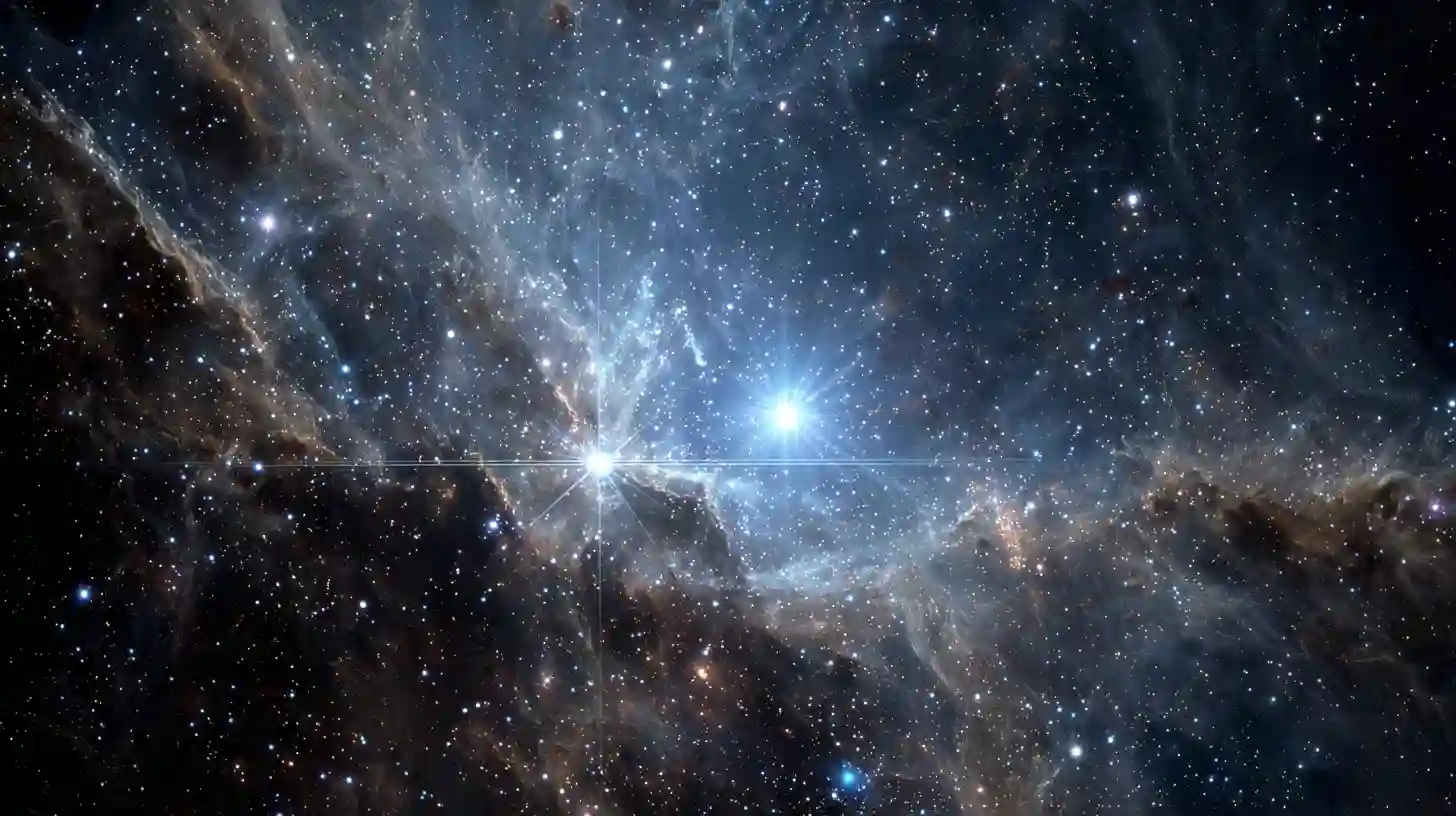
Recent advancements in astrophysics have revolutionized how we observe and analyze cool stars. These stars, often referred to as low-mass stars or red dwarfs, are among the most abundant in the universe but have been challenging to study due to their dimness and the vast distances that separate us from them. New observational techniques have made it possible to peer deeper into these distant objects, providing insights into their formation, behavior, and life cycles. One of the most promising methods involves using space-based telescopes that are not affected by Earth’s atmosphere. These instruments can capture clearer images and more precise measurements of stars' properties, such as their light emissions and magnetic fields. Instruments like the James Webb Space Telescope are particularly useful for studying cooler stars in infrared wavelengths, allowing astronomers to observe these stars even when they emit very little visible light. Another innovative approach is the use of advanced spectrographs that analyze the light emitted by cool stars. By studying the absorption lines in the spectra, scientists can determine the chemical composition of a star, its age, and other vital characteristics. Spectrographs also help in tracking the movements of stars, revealing their rotation rates and whether they are part of binary systems. The discovery of exoplanets orbiting cool stars has also been accelerated by these enhanced techniques. Many cool stars host planets in their habitable zones, where liquid water could exist, making them prime candidates for the search for extraterrestrial life. Through precise measurements of star temperatures and luminosities, astronomers are now able to estimate the conditions of planets within these systems with remarkable accuracy. The ability to monitor cool stars’ magnetic activity has opened a new realm of research. Magnetic fields influence stellar winds and can affect the habitability of surrounding planets. Monitoring these activities allows scientists to better understand the environment that exoplanets experience, shedding light on the potential for life in other solar systems. These advances not only push the boundaries of stellar astrophysics but also pave the way for new discoveries about the universe’s most common and enigmatic stars.