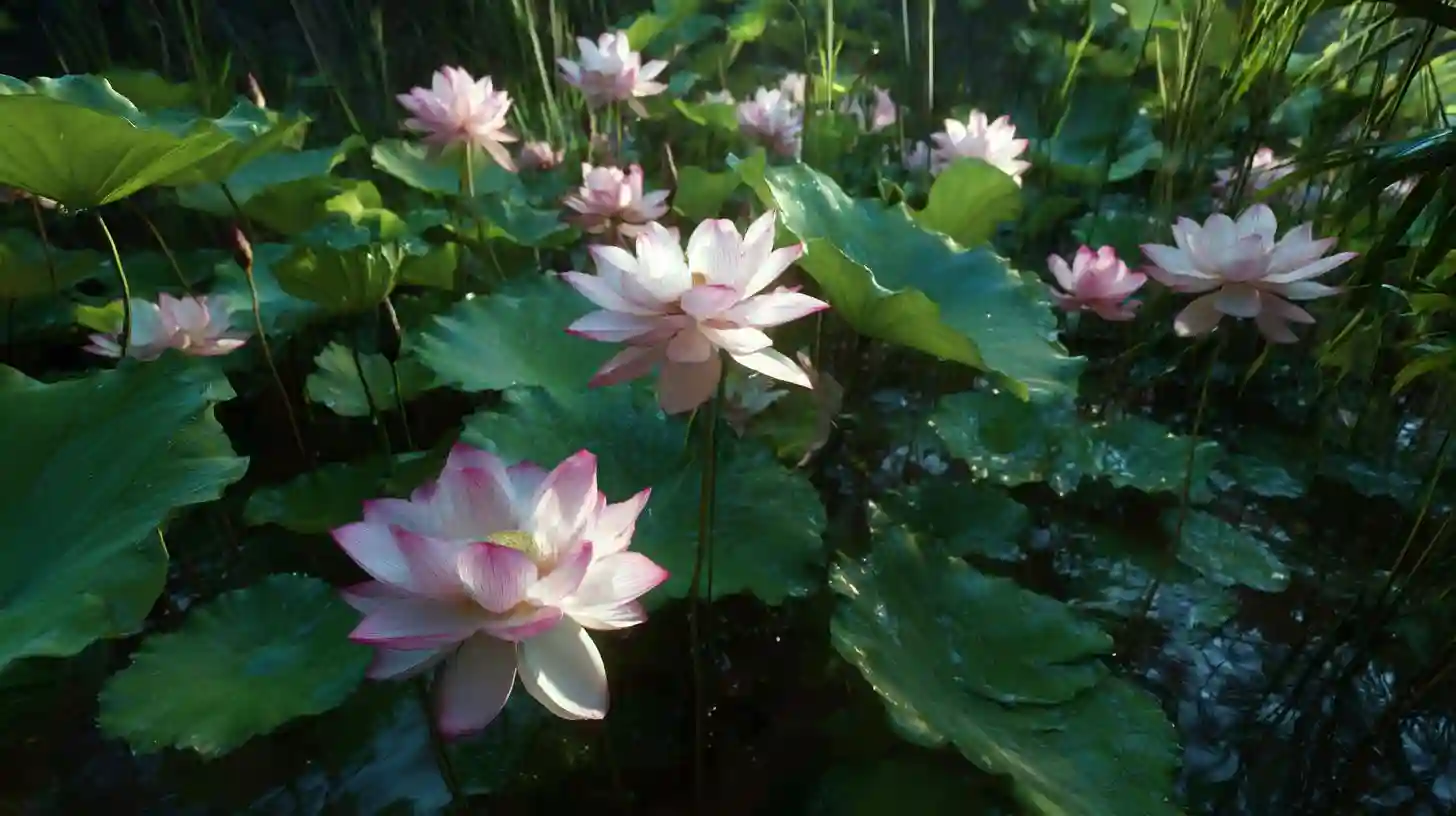
Lotus plants, with their vibrant flowers and expansive leaves, play a crucial role in supporting pollinators within wetlands. The unique structure of lotus flowers, with their large, waxy petals and exposed stamen, attracts a variety of pollinators, particularly bees, butterflies, and beetles. These insects are drawn to the plants by their fragrant blossoms and the rich nectar that the flowers offer. The lotus blooms at the water's surface, making them highly visible to pollinators that frequent wetlands in search of food. The plant's bright colors, especially the soft pink and white hues, contrast sharply with the surrounding greenery, guiding pollinators toward them. As pollinators land on the flowers to gather nectar, they brush against the lotus's pollen-laden anthers, transferring pollen from one bloom to another. This process is essential for the plant’s reproduction, as it facilitates cross-pollination, which strengthens genetic diversity. Wetlands, with their diverse ecosystems, provide an ideal environment for lotus plants to thrive. The plants often grow in shallow, muddy waters, where their long stems and leaves float above the surface, creating a platform for pollinators to land. The combination of the plant's attractive flowers and the abundant insect life in wetlands ensures that lotus plants receive adequate pollination, allowing them to produce seeds that eventually give rise to new lotus plants. The leaves of the lotus, large and circular, also contribute to the wetland ecosystem by providing shade and shelter for smaller aquatic creatures. As they interact with the flowers and leaves, pollinators play an integral role in maintaining the health and vitality of wetlands, helping to sustain a balanced and thriving ecosystem.