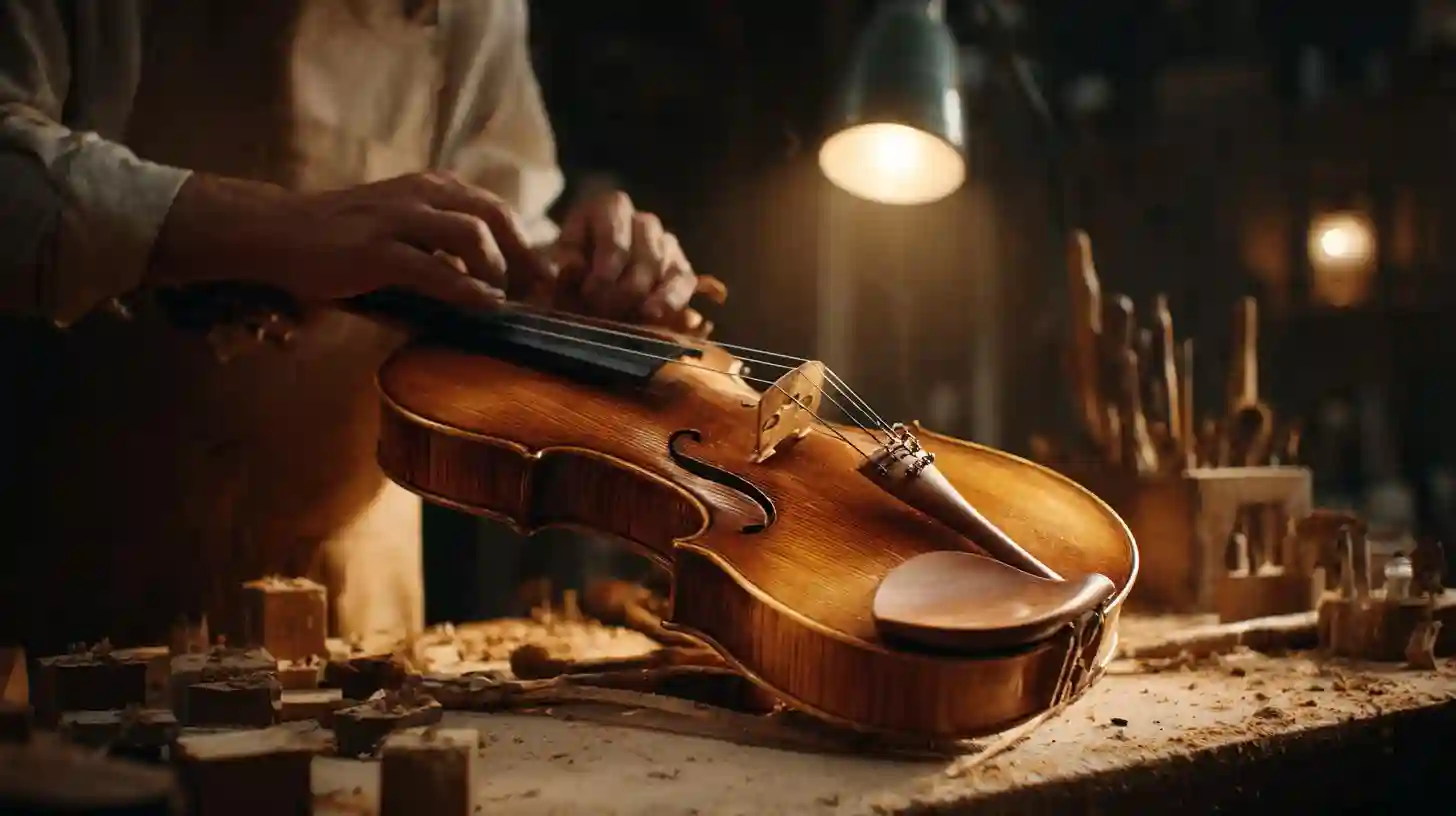
Violin makers, who carefully craft each instrument by hand, represent a tradition that spans centuries. They focus on quality, dedicating months or even years to perfecting a single violin. Each piece is meticulously shaped, from the selection of wood to the careful carving of the scroll and the fine tuning of the strings. The sound of a violin is often the result of the maker’s years of experience and the nuanced understanding they have of materials and acoustics. Their instruments are unique, with subtle differences in tone, texture, and resonance, making each violin a masterpiece in its own right. A well-made violin has an unmistakable depth and warmth to its sound, characteristics that mass-produced instruments can rarely replicate. This individual craftsmanship allows the maker to infuse their personality and artistic vision into every creation, producing a violin that not only sounds exceptional but also feels special in the hands of a musician. On the other hand, mass production methods have revolutionized the availability and affordability of violins, bringing these instruments to a much wider audience. In factories, violins are assembled quickly with precision machinery and standardized processes. This allows manufacturers to produce large quantities of instruments at a fraction of the cost of hand-crafted models. While the quality of mass-produced violins may vary, they are often seen as a practical option for beginners or those who need an instrument on a budget. However, they often lack the complexity and richness that come with a violin made by a skilled craftsman. Mass production prioritizes speed and cost-efficiency, leading to a uniformity in design that does not allow for the same level of customization or refinement found in artisanal violins. The sound, while adequate for many, may not possess the same depth or projection, leaving the player with a more utilitarian instrument that does not evoke the same emotional connection as a hand-crafted one. Violin makers, with their focus on producing an instrument that resonates on a deeper level with the musician, continue to represent the pinnacle of craftsmanship. Their violins are treasured not only for their sound quality but also for their artistic value. However, in a world that values accessibility and affordability, mass-produced violins offer a practical alternative, though they often lack the soul and individuality of those made by master artisans.